The Last Landscape Painter
Richard Mayhew at Karma Gallery

Richard Mayhew at Karma Gallery
April 18–May 30, 2026
5 Stars
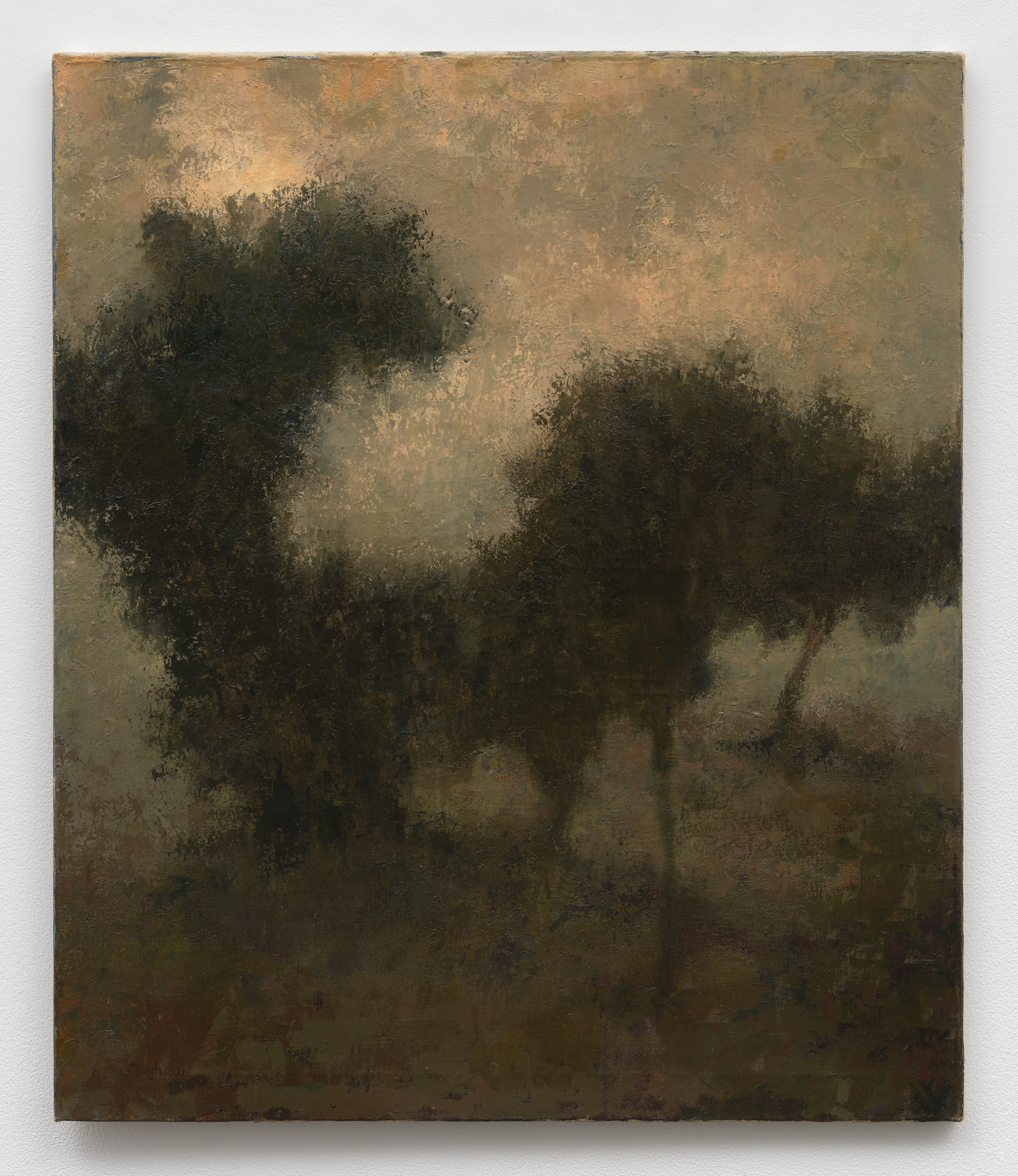
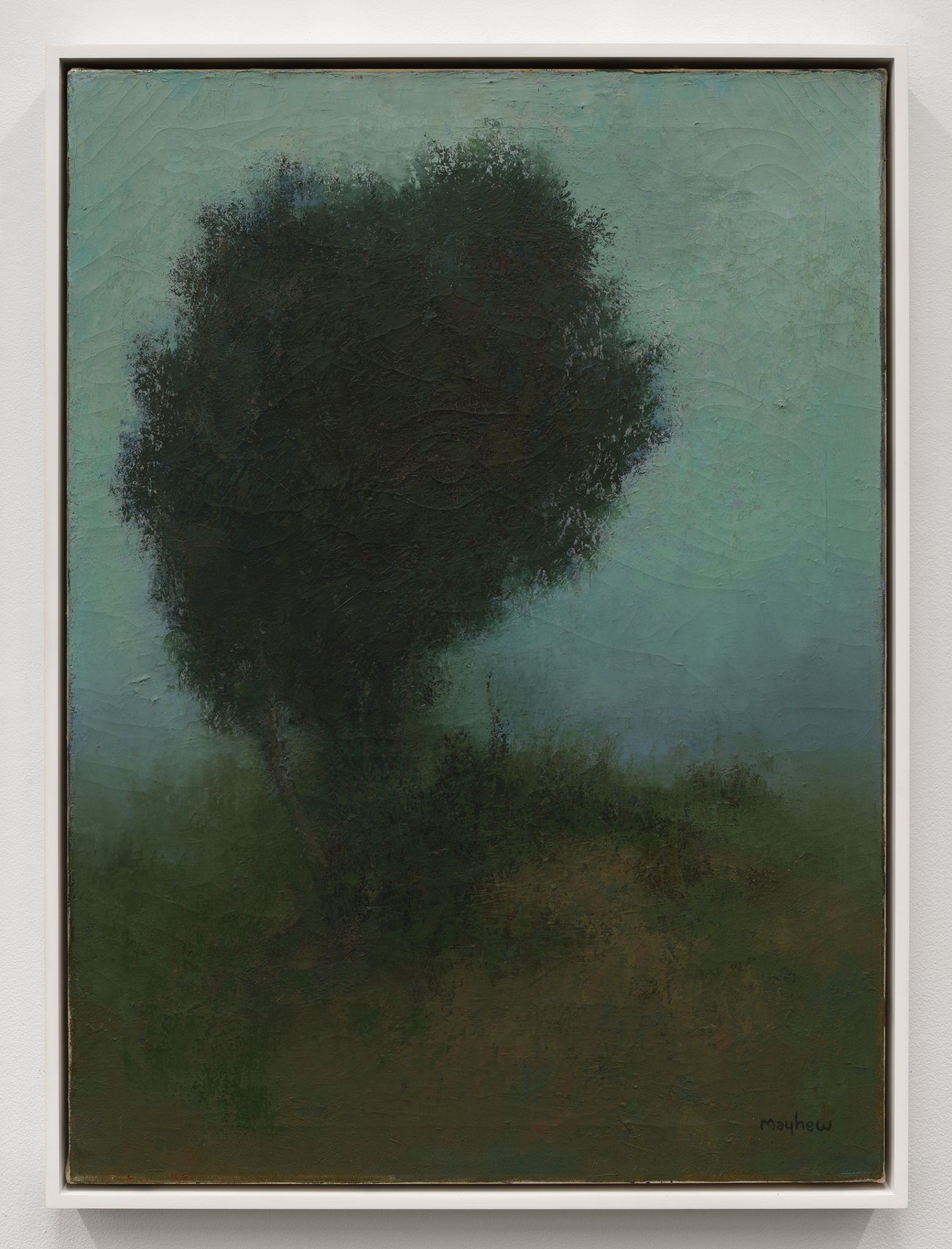
On first glance these seem like they shouldn’t be any good at all. The clashy colors and fuzzy trees resemble some kind of gauzy Romanticism but boy-oh-boy they are something else entirely. The wall text and press release mention that he studied color theory with Hans Hoffman and was part of the scene around Abstract Expressionism. This would seem to be secondary to the rest of the wall text which talks about his mixed Native American/African-American heritage, but it’s clear that he knows his stuff in a way that almost no one, maybe no one, does anymore, which might be the important part. Likewise, he lived during the peak period of American painting and, hanging out at the Cedar Bar, crossed paths with some of the best painters of the 20th century.
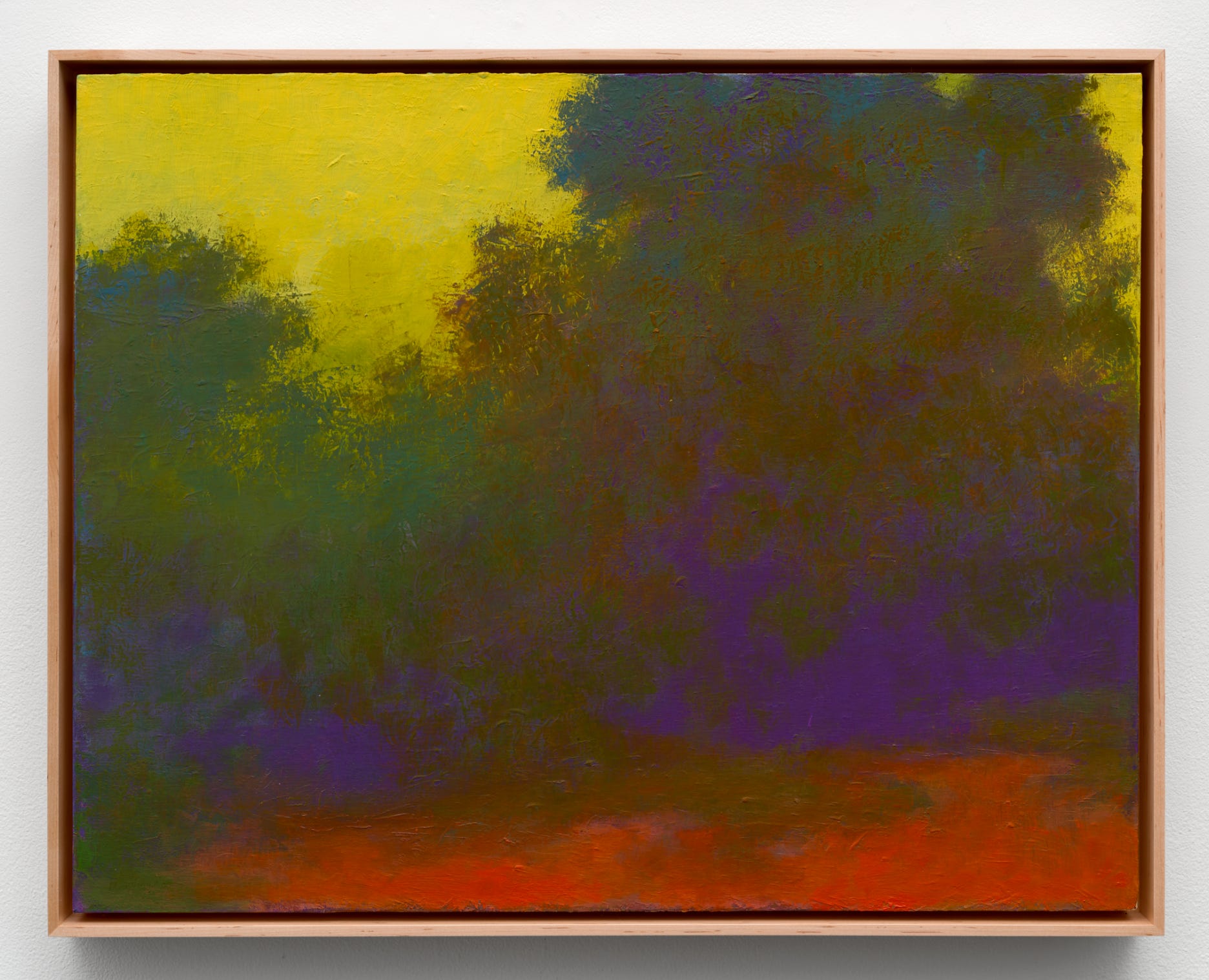
Most of these are paintings of trees in semi-abstract landscapes but everything about them is surprisingly intense, specific, and unusual. All of the underlying colors veritably shine through the upper layers. I hesitate to invoke Rothko but his ability to make colors vibrate and shine through each other is on par with that. Every mark seems utterly specific, not just in terms of mark-making but in terms of color: the painterly equivalent of patting your head and rubbing your belly at the same time but much more difficult. In the paintings of moody dark green trees—Serenade (1965) and Solo (1964), for instance—every mark betrays a slightly different color within very narrow parameters. (You can’t see this in reproduction, sorry). He’s controlling for contrast while varying hue and shade ever-ever-so-slightly, from place to place. The longer you look at these the more the specificity of every element becomes apparent—like when your eyes adjust in the dark: an apparently uniform tree gradually separates out into infinitesimal shades of dark green. The facility with color theory here is top-tier. He could probably teach Josef Albers a thing or two. The clashy intensity of the color veers towards garishness except that it approaches a kind of physical intensity: as if it outpaces aesthetic categories and approaches a kind of optical/perceptual/emotive quality. The palettes could almost be mistaken for something cheesy until you realize just how weird they are. Or that cheesiness is a failed floundering for real emotional resonances.